Friday, August 13, 2010
Windy Austin
Here's a sweet picture of the recently departed Windy Austin, sharing a piano with Jojo Thompson at the Library Club. Photo by Orlis. There's a memorial service for Windy in Fayetteville, at George's on Sunday. There's also a fund to help cover medical and funeral expenses. I will be posting songs here on and off throughout the weekend at least. You can play them through the player and click the link to download for your own sharing.
This first batch is drawn from a live show by Windy and the Hothouse Tomato Boys that I recorded in the summer of 2000 at Georges. vocals: Windy Austin, guitars: Bob Myers and Lloyd Price, bass: Rick Boyette, drums: Larry Matthews.
Weenie Time/Stand By Me
Rome's Last Go Around
Margarita
(Weenie Time, Romeo's Last go Around and Margarita all written by Mike Sumler)
If 6 Was 9
Dick and Jane/Mary Lou
Mack the Knife
Highway 61/She Cut Me Off
(She Cut Me Off written by Charles Tubberville)
Caldonia
They All Play Stairway to Heaven
Wednesday, July 7, 2010
Monday, July 5, 2010
Citations and Revisions
He has waged cruel war against human nature itself, violating its most sacred rights of life and liberty in the persons of a distant people who never offended him, captivatng and carrying them into slavery in another hemisphere, or to incur miserable death in their transportation thither. This piratical warfare, the opprobrium of INFIDEL powers, is the warfare of the CHRISTIAN king of Great Britain. Determined to keep open a market where MEN should be bought and sold, he has prostituted his negative for suppressing every legislative attempt to prohibit or to restrain this execrable commerce. And that this assemblage of horrors might want no fact of distinguished die, he is now exciting those very people to rise in arms among us, and to purchase that liberty of which he has deprived them, by murdering the people for whom he also obtruded them: thus paying off former crimes committed against the LIBERTIES of one people, with crimes which he urges them to commit against the LIVES of another. [omitted from the final draft]
[...]
We hold these truths to be self-evident, that all men are created equal, that they are endowed by their Creator with certain unalienable Rights, that among these are Life, Liberty and the pursuit of Happiness.
[...]
We hold these truths to be self-evident: that all men and women are created equal; that they are endowed by their Creator with certain inalienable rights; that among these are life, liberty, and the pursuit of happiness; that to secure these rights governments are instituted, deriving their just powers from the consent of the governed. Whenever any form of government becomes destructive of these ends, it is the right of those who suffer from it to refuse allegiance to it, and to insist upon the institution of a new government, laying its foundation on such principles, and organizing its powers in such form, as to them shall seem most likely to effect their safety and happiness.
...
Representatives and direct Taxes shall be apportioned among the several States which may be included within this Union, according to their respective Numbers, which shall be determined by adding to the whole Number of free Persons, including those bound to Service for a Term of Years, and excluding Indians not taxed, three fifths of all other Persons.
"That on the first day of January, in the year of our Lord one thousand eight hundred and sixty-three, all persons held as slaves within any State or designated part of a State, the people whereof shall then be in rebellion against the United States, shall be then, thenceforward, and forever free; and the Executive Government of the United States, including the military and naval authority thereof, will recognize and maintain the freedom of such persons, and will do no act or acts to repress such persons, or any of them, in any efforts they may make for their actual freedom.
Four score and seven years ago our fathers brought forth on this continent, a new nation, conceived in Liberty, and dedicated to the proposition that all men are created equal.
[...]
The world will little note, nor long remember what we say here, but it can never forget what they did here. It is for us the living, rather, to be dedicated here to the unfinished work which they who fought here have thus far so nobly advanced. It is rather for us to be here dedicated to the great task remaining before us -- that from these honored dead we take increased devotion to that cause for which they gave the last full measure of devotion -- that we here highly resolve that these dead shall not have died in vain -- that this nation, under God, shall have a new birth of freedom -- and that government of the people, by the people, for the people, shall not perish from the earth.
1. Neither slavery nor involuntary servitude, except as a punishment for crime whereof the party shall have been duly convicted, shall exist within the United States, or any place subject to their jurisdiction.
2. Congress shall have power to enforce this article by appropriate legislation.
1. All persons born or naturalized in the United States, and subject to the jurisdiction thereof, are citizens of the United States and of the State wherein they reside. No State shall make or enforce any law which shall abridge the privileges or immunities of citizens of the United States; nor shall any State deprive any person of life, liberty, or property, without due process of law; nor deny to any person within its jurisdiction the equal protection of the laws.
In determining the question of reasonableness, it is at liberty to act with reference to the established usages, customs, and traditions of the people, and with a view to the promotion of their comfort, and the preservation of the public peace and good order. Gauged by this standard, we cannot say that a law which authorizes or even requires the separation of the two races in public conveyances is unreasonable, or more obnoxious to the fourteenth amendment than the acts of congress requiring separate schools for colored children in the District of Columbia, the constitutionality of which does not seem to have been questioned, or the corresponding acts of state legislatures.
The right of citizens of the United States to vote shall not be denied or abridged by the United States or by any state on account of sex.
Congress shall have power to enforce this article by appropriate legislation.
In the future days, which we seek to make secure, we look forward to a world founded upon four essential human freedoms.
The first is freedom of speech and expression -- everywhere in the world.
The second is freedom of every person to worship God in his own way -- everywhere in the world.
The third is freedom from want, which, translated into world terms, means economic understandings which will secure to every nation a healthy peacetime life for its inhabitants -- everywhere in the world.
The fourth is freedom from fear, which, translated into world terms, means a world-wide reduction of armaments to such a point and in such a thorough fashion that no nation will be in a position to commit an act of physical aggression against any neighbor -- anywhere in the world.
Five score years ago, a great American, in whose symbolic shadow we stand today, signed the Emancipation Proclamation. This momentous decree came as a great beacon light of hope to millions of Negro slaves who had been seared in the flames of withering injustice. It came as a joyous daybreak to end the long night of their captivity.
But one hundred years later, the Negro still is not free. One hundred years later, the life of the Negro is still sadly crippled by the manacles of segregation and the chains of discrimination. One hundred years later, the Negro lives on a lonely island of poverty in the midst of a vast ocean of material prosperity. One hundred years later, the Negro is still languishing in the corners of American society and finds himself an exile in his own land. So we have come here today to dramatize a shameful condition.
In a sense we have come to our nation's capital to cash a check. When the architects of our republic wrote the magnificent words of the Constitution and the Declaration of Independence, they were signing a promissory note to which every American was to fall heir. This note was a promise that all men, yes, black men as well as white men, would be guaranteed the unalienable rights of life, liberty, and the pursuit of happiness.
SEC. 2. No voting qualification or prerequisite to voting, or standard, practice, or procedure shall be imposed or applied by any State or political subdivision to deny or abridge the right of any citizen of the United States to vote on account of race or color.
[...]
We hold these truths to be self-evident, that all men are created equal, that they are endowed by their Creator with certain unalienable Rights, that among these are Life, Liberty and the pursuit of Happiness.
We hold these truths to be self-evident: that all men and women are created equal; that they are endowed by their Creator with certain inalienable rights; that among these are life, liberty, and the pursuit of happiness; that to secure these rights governments are instituted, deriving their just powers from the consent of the governed. Whenever any form of government becomes destructive of these ends, it is the right of those who suffer from it to refuse allegiance to it, and to insist upon the institution of a new government, laying its foundation on such principles, and organizing its powers in such form, as to them shall seem most likely to effect their safety and happiness.
...
Representatives and direct Taxes shall be apportioned among the several States which may be included within this Union, according to their respective Numbers, which shall be determined by adding to the whole Number of free Persons, including those bound to Service for a Term of Years, and excluding Indians not taxed, three fifths of all other Persons.
"That on the first day of January, in the year of our Lord one thousand eight hundred and sixty-three, all persons held as slaves within any State or designated part of a State, the people whereof shall then be in rebellion against the United States, shall be then, thenceforward, and forever free; and the Executive Government of the United States, including the military and naval authority thereof, will recognize and maintain the freedom of such persons, and will do no act or acts to repress such persons, or any of them, in any efforts they may make for their actual freedom.
Four score and seven years ago our fathers brought forth on this continent, a new nation, conceived in Liberty, and dedicated to the proposition that all men are created equal.
[...]
The world will little note, nor long remember what we say here, but it can never forget what they did here. It is for us the living, rather, to be dedicated here to the unfinished work which they who fought here have thus far so nobly advanced. It is rather for us to be here dedicated to the great task remaining before us -- that from these honored dead we take increased devotion to that cause for which they gave the last full measure of devotion -- that we here highly resolve that these dead shall not have died in vain -- that this nation, under God, shall have a new birth of freedom -- and that government of the people, by the people, for the people, shall not perish from the earth.
1. Neither slavery nor involuntary servitude, except as a punishment for crime whereof the party shall have been duly convicted, shall exist within the United States, or any place subject to their jurisdiction.
2. Congress shall have power to enforce this article by appropriate legislation.
1. All persons born or naturalized in the United States, and subject to the jurisdiction thereof, are citizens of the United States and of the State wherein they reside. No State shall make or enforce any law which shall abridge the privileges or immunities of citizens of the United States; nor shall any State deprive any person of life, liberty, or property, without due process of law; nor deny to any person within its jurisdiction the equal protection of the laws.
In determining the question of reasonableness, it is at liberty to act with reference to the established usages, customs, and traditions of the people, and with a view to the promotion of their comfort, and the preservation of the public peace and good order. Gauged by this standard, we cannot say that a law which authorizes or even requires the separation of the two races in public conveyances is unreasonable, or more obnoxious to the fourteenth amendment than the acts of congress requiring separate schools for colored children in the District of Columbia, the constitutionality of which does not seem to have been questioned, or the corresponding acts of state legislatures.
The right of citizens of the United States to vote shall not be denied or abridged by the United States or by any state on account of sex.
Congress shall have power to enforce this article by appropriate legislation.
In the future days, which we seek to make secure, we look forward to a world founded upon four essential human freedoms.
The first is freedom of speech and expression -- everywhere in the world.
The second is freedom of every person to worship God in his own way -- everywhere in the world.
The third is freedom from want, which, translated into world terms, means economic understandings which will secure to every nation a healthy peacetime life for its inhabitants -- everywhere in the world.
The fourth is freedom from fear, which, translated into world terms, means a world-wide reduction of armaments to such a point and in such a thorough fashion that no nation will be in a position to commit an act of physical aggression against any neighbor -- anywhere in the world.
Segregation of white and Negro children in the public schools of a State solely on the basis of race, pursuant to state laws permitting or requiring such segregation, denies to Negro children the equal protection of the laws guaranteed by the Fourteenth Amendment
Five score years ago, a great American, in whose symbolic shadow we stand today, signed the Emancipation Proclamation. This momentous decree came as a great beacon light of hope to millions of Negro slaves who had been seared in the flames of withering injustice. It came as a joyous daybreak to end the long night of their captivity.
But one hundred years later, the Negro still is not free. One hundred years later, the life of the Negro is still sadly crippled by the manacles of segregation and the chains of discrimination. One hundred years later, the Negro lives on a lonely island of poverty in the midst of a vast ocean of material prosperity. One hundred years later, the Negro is still languishing in the corners of American society and finds himself an exile in his own land. So we have come here today to dramatize a shameful condition.
In a sense we have come to our nation's capital to cash a check. When the architects of our republic wrote the magnificent words of the Constitution and the Declaration of Independence, they were signing a promissory note to which every American was to fall heir. This note was a promise that all men, yes, black men as well as white men, would be guaranteed the unalienable rights of life, liberty, and the pursuit of happiness.
SEC. 2. No voting qualification or prerequisite to voting, or standard, practice, or procedure shall be imposed or applied by any State or political subdivision to deny or abridge the right of any citizen of the United States to vote on account of race or color.
REVISED (5): NOW
[...]
Monday, May 10, 2010
Wednesday, March 31, 2010
Lost & Found
Alright- so there is this argument (and elsewhere) that rock aesthetics are defined by recordings. There are limitations to this insight—like the way it tends to break down if the discourse you’re surveying for evidence favors the participation of musicians, jam band fans, or happens at certain places and times, etc. but basically it’s usually been true in many places during rock’s now glimmering and fading postwar hegemony in the US and the UK. Rock occurs in objects that reproduce recorded sound in moments and spaces different than those it was recorded in. And more often than not the original space/moment doesn’t/didn’t literally exist and is described and surrounded only by that recording; that created arrangement of vibrations over time that I’ll call the sound object. So there’s a very deep affective relationship that gets built up between the sound object and the artifact it’s encoded in. The music industry that exists through rock/as rock has defined itself according to it’s ability to deliver new kinds of sound encoded objects, and it’s depended to some great degree on its monopoly on the legitimate and efficient production of those objects, including the ability of its major actors to define what’s legitimate and efficient (and vice versa) in their interests.
So what happens to rock when the sound object becomes separable from the found object? Well, a bunch of things that I’ll address in another post, though a lot of it is likely familiar, if heatedly debated stuff. What I’m interested in is: if the musical form and the object are coequal, what happens to that musical form when the object goes away, when not just specific kinds of objects become each progressively obsolete, but when the idea that there is a specific, legitimate physical object at all that exists to deliver that sound, what happens to the sound? Not to the record company, the record stores, the musicians, the radio stations, etc. What happens to the music of objects when the musical object is obsolete?
Sunday, March 21, 2010
words
Alright, so this is for those people up on capitol hill doing the Republican's dirty work for them. Like the song says "If your words are no damn good, maybe you're no good..."
Saturday, March 20, 2010
Misc. on the passing of Alex Chilton
1. I'm struck by the sudden blooming of video tributes on my Facebook page. Lots of homemade videos and those songs- ! This is what we do now, right? We seek simultaneity of affect and "Years ago, my heart was set to live, oh..." you know?
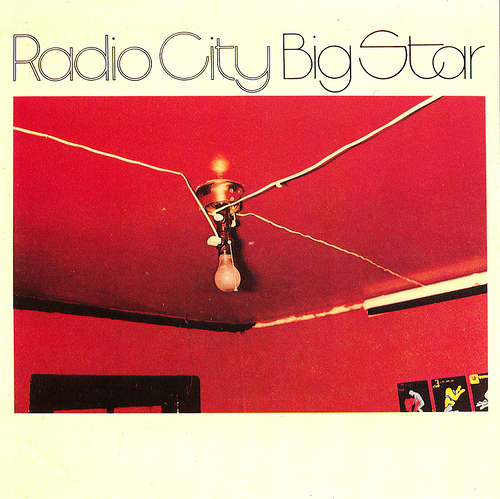
2. Rcvd. 1 (1) Cassette [Maxell XLll90] #1 Record/Radio City from the Rev. Wayne Coomers in winter 1987/88. Aassoc. Images: #1 Record sitting in front of a stack of LPs in the living room of the California House/D-Luxe Kitchen, that round dish machine that Barry washed his clothes in/noticing that the "astrological" poster that's in the Willliam Eggleston photo on the cover of Radio City was on my living room wall when we lived on Rush Dr./Millie's Deli, Springfield, Mo.
3. I remember being worried that he wasn't going to make it out of New Orleans during Hurricane Katrina.
4. Chilton was "famous" in a strange way, it was at first a kind of negative fame or conspiracy by record collectors and rock critics. Eventually it would seem like this fame was what he was most famous for.
5. You can really hear just how things are gonna go with him in the second verse of the second song on side one of #1 Record:
There's people around who'll tell you that they know
The places where they send you, and it's easy to go
They'll zip you up and dress you down
and stand you in a row
but you know you don't have to,
you can just say "No."
You can also hear, I think, why his constituency was so broad and deep. Because we all needed to hear someone say that in a pop song, in a great pop song, just like that.
Subscribe to:
Posts (Atom)