1. I'm struck by the sudden blooming of video tributes on my Facebook page. Lots of homemade videos and those songs- ! This is what we do now, right? We seek simultaneity of affect and "Years ago, my heart was set to live, oh..." you know?
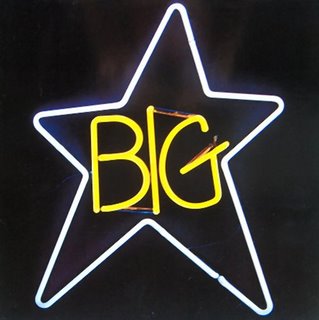
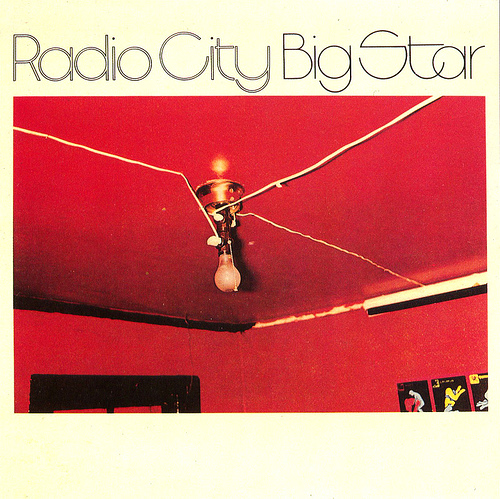
2. Rcvd. 1 (1) Cassette [Maxell XLll90] #1 Record/Radio City from the Rev. Wayne Coomers in winter 1987/88. Aassoc. Images: #1 Record sitting in front of a stack of LPs in the living room of the California House/D-Luxe Kitchen, that round dish machine that Barry washed his clothes in/noticing that the "astrological" poster that's in the Willliam Eggleston photo on the cover of Radio City was on my living room wall when we lived on Rush Dr./Millie's Deli, Springfield, Mo.
3. I remember being worried that he wasn't going to make it out of New Orleans during Hurricane Katrina.
4. Chilton was "famous" in a strange way, it was at first a kind of negative fame or conspiracy by record collectors and rock critics. Eventually it would seem like this fame was what he was most famous for.
5. You can really hear just how things are gonna go with him in the second verse of the second song on side one of #1 Record:
There's people around who'll tell you that they know
The places where they send you, and it's easy to go
They'll zip you up and dress you down
and stand you in a row
but you know you don't have to,
you can just say "No."
You can also hear, I think, why his constituency was so broad and deep. Because we all needed to hear someone say that in a pop song, in a great pop song, just like that.
Saturday, March 20, 2010


Thursday, January 28, 2010
Things Look Different...
This ran in the Fayetteville free Weekly last week. It was written in reply to this article by Joe Katzbeck. It might make more sense if you read Joe's take first. I'm moving mine here and will likely expand it a little bit. Feel free to leave suggestions, revisions, and corrections in comments.
Things Look Different: Another Story of Punk Rock in Fayetteville
“You can tell when the reality changes. Things look different.” That’s written in a comic book dialog balloon that I cut out and pasted into a poster I made for my favorite Fayetteville band, Rex Rootz, in the summer of 1985. The poster was for a rent party, featuring the Rootz and Wayne Coomers and the Original Sins, held in the practice studio at 347½ West Avenue, a location soon to be known across Fayetteville simply as The Icehouse. That dialog balloon proved to be faintly prophetic. Things did look (and sound) different in Fayetteville after that party. It was the last show for Rex Rootz, but the scene that had started to jell at the summer rent parties grew, eventually linking Fayetteville with independent bands, record labels and scenes in towns and cities across the country.
You can read about that national scene, including several bands that played Fayetteville, in Michael Azzarad’s fine book Our Band Could Be Your Life: Scenes from the American Indie Underground 1981-1991. The local histories that made up these scenes however are still largely unwritten. Last week the Free Weekly published A Story of Punk Rock in Fayetteville, Joe Katzbeck’s account of his experience of this changed reality in the mid 1980s. I don’t intend to offer a complete history of the Icehouse here, or to dispute most of the events described by Joe, my good friend and first real musical teacher, but I do want to offer a different perspective. This is another story of punk rock in Fayetteville, one of many, because those changes looked different from different angles, and this history is still being written.
As Joe suggested, part of the story of the icehouse was a story about how anger, one of the most visible colors in punk rock’s palette, can be a constructive force. Some of the original energy that catalyzed the icehouse group came from the break up of the Rex Rootz, the dispute between the band’s erstwhile leader and its putative sidemen and women who took over the practice studio. But that’s hardly the whole story. The other crucial, transformative happening in the summer of 1985 was the meeting between the small but tenacious crowd of townie punks that made up Rex Rootz’s core audience, and the crowd of college students, mostly out of town émigrés, who were members and fans of Wayne Coomers and the Original Sins. The instant bands that sprang up in the month between the last Rex Rootz show and the first icehouse party owed everything to the mingling between the fans and former members of these two very different bands.
The Rootz were self consciously punk rock. They had started in 1980 with a small catalog of songs written by founding guitarist Sam Karnatz, and other's cooked up collaboratively with input from soon-to-be surrealist poet Fred Mclain. Those songs had titles like “I Don’t Want No Friends” and “Paranoid Man” and "Mama Thinks I'm Crazy." As they matured, and Mclain left, the rhythms became trickier, the chords more complex and the guitar solos longer. By the time that Joe joined them they were a guitar band with a bad attitude, which is certainly one way of playing punk rock.
Wayne Coomers and the Original Sins were punk rock in a different way. They mostly played loose, loud versions of 60s garage classics, and whatever else they could figure out over a few beers. Like Lenny Kaye’s primal Nuggets sampler they drew on the first body of music that was ever called “punk” and made it their own thru sheer enthusiasm. In fact both bands drew on the legacy of 60s rock, but even there the contrast is instructive: the Rootz covered the Yardbirds and the Doors, while the Coomers covered Count 5 and The Standells, not to mention the Velvet Underground. The Rootz had become increasingly professional in the process of butting their heads against the Dickson Street bars, depending on virtuoso performances from their lead guitarist, drummer, and new organ player to get their darkly humorous songs across in a town where blues rock was the universal language. That made for a fun band to watch and dance to, but one that was more exciting than inviting. I first saw Wayne Coomers and the Original Sins at a houseparty on California Street. The hardwood floor in the back bedroom was literally shaking. All the songs were three chord wonders. They didn’t have a bass player. I thought “hey, maybe I could do this!”
For those of us who had followed Rex Rootz through the lean years, the Coomers’ aesthetic was invigorating. So was having our own place to play and not depending on bar owners who were happy to look at your list of covers in lieu of a demo tape. The parties that we held at the icehouse between July of 1985 and March of 1986 attracted the ire of those club owners not because we had pulled a huge crowd of local punk rock fans out of their bars, but because we had created a crowd that hadn’t been there before, and that crowd was attached to a place more than any one band. And that place, the only place on the street bringing in large crowds amid a recession and a whisper campaign about how “dangerous” Dickson had become, was ignoring the codes and regulations that the bars were bound to follow.
Bars on Dickson paid premium rent, and closed at 2:00 AM. Our posters read “Doors open at 9:00, music stops when you do.” The Icehouse charged three dollars at the door, our bands played for free and we regularly paid traveling punk bands more money than they made anywhere else on their tours. Nobody got paid for working shows. Audiences showed up and lost their minds not because the bands were so good, but because we had created an unpredictable situation for playing and hearing music. In fact, with the exception of the Rhythm Method, most of the early Icehouse bands made music that people would have walked out of a bar to get away from. People even walked out of the Icehouse when my band, The Urge, decided to all switch instruments during our second time through the 9 songs we knew one very late night. But they just went out on the porch and came back in when the song was over.
Many of us did eventually learn to make sounds with our instruments and voices that could hold people’s attention someplace outside of the Icehouse, but it didn’t happen overnight. I had gone from poster artist to bass player in about 3 weeks and others had made similar transitions. There were plenty of hiccups and missteps along the way. People graduated, or left town for school or jobs, or decided that they didn’t really like being on stage after all. The parties were amazing, joyous events, but as the beat cops explained to the city council, there was a problem of “no control.” Like Joe said last week, the city had to close us down. Not having a venue re-introduced money into our ecosphere, a challenge which we handled like true artists: not very well. We eventually sorted this out, but not before we lost the space and a few of our founding members. And it’s typical of our quixotic approach that, faced with imminent closure, we decided to rent a bigger space and put on bigger shows.
The last public show at the icehouse was March 8th, 1986. The headliner was Tav Falco, an esoteric hipster blues singer from Memphis. The opening act was Fayetteville’s own Crazy John Lowe, who now lives in Memphis and tours as Johnny Lowebowe, playing the 1 string cigar box electric guitars he makes and sells. The space at 347½ West had physical issues that we couldn’t resolve so we had rented the much larger warehouse next door and cut a doorway between the two sides, intending to use the small space only for recording and practicing. Chris Gail, A carpenter friend who probably still hasn’t been thanked enough, led a volunteer crew and built a large, sturdy wooden stage in 48 hours. The entire affair was typical of our powerful but unsustainable process, something like a cross between a punk rock keg party and an Amish house-raising. It’s probably good that we didn’t understand that we’d never, ever get the conditional use permit we needed to keep doing shows there.
So we went back to practicing in the small side and booked bands at Lily’s where the punks and the folks that the punks thought were bikers mixed like oil and water, and we kept looking for new places to do our own shows. By the fall of 1986 we were renting the old Brass Monkey club in the basement of the Mountain Inn on a regular basis. We never found a space quite like the Icehouse, and eventually our own volunteerism wore us down, but for the next three years word spread through independent bands, booking agencies and small record labels that Fayetteville was a great place to play, that the promoters would find houses for you to crash at, cook vegetarian meals and be honest about the door money, and that audiences would show up and lose their minds.
During this stretch the town hosted Green On Red, Dinosaur Junior, Black Flag, Jason and the Scorchers, The Flaming Lips, Mojo Nixon, Eugene Chadbourne, The leaving Trains, The Screaming Trees, M.I.A., and many more bands that should have been famous enough to mention here too. In many ways this was a more active and vibrant period than the original run of Icehouse shows, and it’s tempting to call it a “third wave” of musical activity, as Joe did in his account. But these things are relative and to me this all felt like a continuation of what we had started on West Avenue. Paul Boatright and Wade Ogle met and first collaborated after a Brass Monkey party. Their bands, Punkinhead and Dali Automatic respectively, re-defined the Fayetteville sound in the 1990s, after some bar owners decided that yes, there might be some money in this “alternative” music after all. Paul and Wade are still making great music in Fayetteville today. Keith Hollingshead, the drummer for Rex Rootz, The Urge and The Rhythm Method plays with The Staggering Odds. It’s all part of one long story and it has different endings and beginnings depending on who tells it and why.
The very last band to play at the Icehouse was Camper Van Beethoven, who went back to the big, shut down side and played on borrowed instruments until 5:00 after their show at Lily’s on March 29th. When they came back a year later, freshly signed to virgin records, they had a new song called “Shut Us Down” that my new band, Jesus Lee Jones had been playing in our set for a few months. It went like this:
I’ve got an electric guitar and half a bottle of warm beer.
I’ve got some funny ideas about what sounds good.
Better shut us down. Better shut us down.
I’ve got a dollar fifty and nothin’ better to do.
I’ve got a half tank of gas and nowhere to go.
Better shut us down. Better shut us down.
We were sure it was about us, but it was likely the same story in a lot of towns across the country where musicians and audiences had tried to find new ways to get together.
Things Look Different: Another Story of Punk Rock in Fayetteville
“You can tell when the reality changes. Things look different.” That’s written in a comic book dialog balloon that I cut out and pasted into a poster I made for my favorite Fayetteville band, Rex Rootz, in the summer of 1985. The poster was for a rent party, featuring the Rootz and Wayne Coomers and the Original Sins, held in the practice studio at 347½ West Avenue, a location soon to be known across Fayetteville simply as The Icehouse. That dialog balloon proved to be faintly prophetic. Things did look (and sound) different in Fayetteville after that party. It was the last show for Rex Rootz, but the scene that had started to jell at the summer rent parties grew, eventually linking Fayetteville with independent bands, record labels and scenes in towns and cities across the country.
You can read about that national scene, including several bands that played Fayetteville, in Michael Azzarad’s fine book Our Band Could Be Your Life: Scenes from the American Indie Underground 1981-1991. The local histories that made up these scenes however are still largely unwritten. Last week the Free Weekly published A Story of Punk Rock in Fayetteville, Joe Katzbeck’s account of his experience of this changed reality in the mid 1980s. I don’t intend to offer a complete history of the Icehouse here, or to dispute most of the events described by Joe, my good friend and first real musical teacher, but I do want to offer a different perspective. This is another story of punk rock in Fayetteville, one of many, because those changes looked different from different angles, and this history is still being written.
As Joe suggested, part of the story of the icehouse was a story about how anger, one of the most visible colors in punk rock’s palette, can be a constructive force. Some of the original energy that catalyzed the icehouse group came from the break up of the Rex Rootz, the dispute between the band’s erstwhile leader and its putative sidemen and women who took over the practice studio. But that’s hardly the whole story. The other crucial, transformative happening in the summer of 1985 was the meeting between the small but tenacious crowd of townie punks that made up Rex Rootz’s core audience, and the crowd of college students, mostly out of town émigrés, who were members and fans of Wayne Coomers and the Original Sins. The instant bands that sprang up in the month between the last Rex Rootz show and the first icehouse party owed everything to the mingling between the fans and former members of these two very different bands.
The Rootz were self consciously punk rock. They had started in 1980 with a small catalog of songs written by founding guitarist Sam Karnatz, and other's cooked up collaboratively with input from soon-to-be surrealist poet Fred Mclain. Those songs had titles like “I Don’t Want No Friends” and “Paranoid Man” and "Mama Thinks I'm Crazy." As they matured, and Mclain left, the rhythms became trickier, the chords more complex and the guitar solos longer. By the time that Joe joined them they were a guitar band with a bad attitude, which is certainly one way of playing punk rock.
Wayne Coomers and the Original Sins were punk rock in a different way. They mostly played loose, loud versions of 60s garage classics, and whatever else they could figure out over a few beers. Like Lenny Kaye’s primal Nuggets sampler they drew on the first body of music that was ever called “punk” and made it their own thru sheer enthusiasm. In fact both bands drew on the legacy of 60s rock, but even there the contrast is instructive: the Rootz covered the Yardbirds and the Doors, while the Coomers covered Count 5 and The Standells, not to mention the Velvet Underground. The Rootz had become increasingly professional in the process of butting their heads against the Dickson Street bars, depending on virtuoso performances from their lead guitarist, drummer, and new organ player to get their darkly humorous songs across in a town where blues rock was the universal language. That made for a fun band to watch and dance to, but one that was more exciting than inviting. I first saw Wayne Coomers and the Original Sins at a houseparty on California Street. The hardwood floor in the back bedroom was literally shaking. All the songs were three chord wonders. They didn’t have a bass player. I thought “hey, maybe I could do this!”
For those of us who had followed Rex Rootz through the lean years, the Coomers’ aesthetic was invigorating. So was having our own place to play and not depending on bar owners who were happy to look at your list of covers in lieu of a demo tape. The parties that we held at the icehouse between July of 1985 and March of 1986 attracted the ire of those club owners not because we had pulled a huge crowd of local punk rock fans out of their bars, but because we had created a crowd that hadn’t been there before, and that crowd was attached to a place more than any one band. And that place, the only place on the street bringing in large crowds amid a recession and a whisper campaign about how “dangerous” Dickson had become, was ignoring the codes and regulations that the bars were bound to follow.
Bars on Dickson paid premium rent, and closed at 2:00 AM. Our posters read “Doors open at 9:00, music stops when you do.” The Icehouse charged three dollars at the door, our bands played for free and we regularly paid traveling punk bands more money than they made anywhere else on their tours. Nobody got paid for working shows. Audiences showed up and lost their minds not because the bands were so good, but because we had created an unpredictable situation for playing and hearing music. In fact, with the exception of the Rhythm Method, most of the early Icehouse bands made music that people would have walked out of a bar to get away from. People even walked out of the Icehouse when my band, The Urge, decided to all switch instruments during our second time through the 9 songs we knew one very late night. But they just went out on the porch and came back in when the song was over.
Many of us did eventually learn to make sounds with our instruments and voices that could hold people’s attention someplace outside of the Icehouse, but it didn’t happen overnight. I had gone from poster artist to bass player in about 3 weeks and others had made similar transitions. There were plenty of hiccups and missteps along the way. People graduated, or left town for school or jobs, or decided that they didn’t really like being on stage after all. The parties were amazing, joyous events, but as the beat cops explained to the city council, there was a problem of “no control.” Like Joe said last week, the city had to close us down. Not having a venue re-introduced money into our ecosphere, a challenge which we handled like true artists: not very well. We eventually sorted this out, but not before we lost the space and a few of our founding members. And it’s typical of our quixotic approach that, faced with imminent closure, we decided to rent a bigger space and put on bigger shows.
The last public show at the icehouse was March 8th, 1986. The headliner was Tav Falco, an esoteric hipster blues singer from Memphis. The opening act was Fayetteville’s own Crazy John Lowe, who now lives in Memphis and tours as Johnny Lowebowe, playing the 1 string cigar box electric guitars he makes and sells. The space at 347½ West had physical issues that we couldn’t resolve so we had rented the much larger warehouse next door and cut a doorway between the two sides, intending to use the small space only for recording and practicing. Chris Gail, A carpenter friend who probably still hasn’t been thanked enough, led a volunteer crew and built a large, sturdy wooden stage in 48 hours. The entire affair was typical of our powerful but unsustainable process, something like a cross between a punk rock keg party and an Amish house-raising. It’s probably good that we didn’t understand that we’d never, ever get the conditional use permit we needed to keep doing shows there.
So we went back to practicing in the small side and booked bands at Lily’s where the punks and the folks that the punks thought were bikers mixed like oil and water, and we kept looking for new places to do our own shows. By the fall of 1986 we were renting the old Brass Monkey club in the basement of the Mountain Inn on a regular basis. We never found a space quite like the Icehouse, and eventually our own volunteerism wore us down, but for the next three years word spread through independent bands, booking agencies and small record labels that Fayetteville was a great place to play, that the promoters would find houses for you to crash at, cook vegetarian meals and be honest about the door money, and that audiences would show up and lose their minds.
During this stretch the town hosted Green On Red, Dinosaur Junior, Black Flag, Jason and the Scorchers, The Flaming Lips, Mojo Nixon, Eugene Chadbourne, The leaving Trains, The Screaming Trees, M.I.A., and many more bands that should have been famous enough to mention here too. In many ways this was a more active and vibrant period than the original run of Icehouse shows, and it’s tempting to call it a “third wave” of musical activity, as Joe did in his account. But these things are relative and to me this all felt like a continuation of what we had started on West Avenue. Paul Boatright and Wade Ogle met and first collaborated after a Brass Monkey party. Their bands, Punkinhead and Dali Automatic respectively, re-defined the Fayetteville sound in the 1990s, after some bar owners decided that yes, there might be some money in this “alternative” music after all. Paul and Wade are still making great music in Fayetteville today. Keith Hollingshead, the drummer for Rex Rootz, The Urge and The Rhythm Method plays with The Staggering Odds. It’s all part of one long story and it has different endings and beginnings depending on who tells it and why.
The very last band to play at the Icehouse was Camper Van Beethoven, who went back to the big, shut down side and played on borrowed instruments until 5:00 after their show at Lily’s on March 29th. When they came back a year later, freshly signed to virgin records, they had a new song called “Shut Us Down” that my new band, Jesus Lee Jones had been playing in our set for a few months. It went like this:
I’ve got an electric guitar and half a bottle of warm beer.
I’ve got some funny ideas about what sounds good.
Better shut us down. Better shut us down.
I’ve got a dollar fifty and nothin’ better to do.
I’ve got a half tank of gas and nowhere to go.
Better shut us down. Better shut us down.
We were sure it was about us, but it was likely the same story in a lot of towns across the country where musicians and audiences had tried to find new ways to get together.
Wednesday, December 9, 2009
Wednesday, December 2, 2009
Rodeo at the (old) Student Union Ballroom, 1971
New technology, especially that which allows people to duplicate and share pieces of expressive culture, always allows for reconfigurations and DIY revisions of historical memory. The libratory possibilities involved in this are compromised of course, by the (small) circulation of these materials relative to mass-market artifacts and instituionally derived narratives, and by the imbrication of the technology and its social apparatus in networks of capital that posit exclusionary barriers and offer consolation prizes in order to co-opt the possibility of truly extracting freedom from a world of necessity. But, caveats aside, and apologies for sounding like a .com uptopian ten years too late, I do think that we're living through the birth of the digital vernacular, and that whatever it's corporatized and compromised position, Youtube offers a fascinating forum for people to personalize and revise local history. there's a line to walk here, over the pit of nostalgia and false consciousness, but for me this came roaring out of the screen and obliterated what Jameson calls "the nostalgia for the present" which keeps us dangerously disconnected from the past. Your mileage may vary.
Riffs: I imagine that the tape recorder this was recorded on, now obsolete, inspired many of the same Utopian visions that I'm tapping into regarding Youtube. And well it should, since that technology is just as, if not more important in delivering this artifact to us than digital video. Second, note the club "West Street" which I'd heard about but never seen pictures of, located on the corner of Laffayette and West Ave, longtime home to the Magnolia Haircutters and a bike shop. I don't know what it is now. Also: lots of gigs with Moloch, a truly revolutionary multi-racial heavy blues band from Memphis that included Mudboy and the Neutrons guitarist Lee Baker. Also, maybe because I know him and not the others, I find the pictures of a young Windy Austin, still 5 years or so away from Zorro's first performance, fascinating.
Riffs: I imagine that the tape recorder this was recorded on, now obsolete, inspired many of the same Utopian visions that I'm tapping into regarding Youtube. And well it should, since that technology is just as, if not more important in delivering this artifact to us than digital video. Second, note the club "West Street" which I'd heard about but never seen pictures of, located on the corner of Laffayette and West Ave, longtime home to the Magnolia Haircutters and a bike shop. I don't know what it is now. Also: lots of gigs with Moloch, a truly revolutionary multi-racial heavy blues band from Memphis that included Mudboy and the Neutrons guitarist Lee Baker. Also, maybe because I know him and not the others, I find the pictures of a young Windy Austin, still 5 years or so away from Zorro's first performance, fascinating.
Wednesday, November 18, 2009
Thanks Fayetteville Flyer!
Thanks to the folks at The Fayetteville Flyer for adding this blog to the Flyer Blogfolio. If you wander here from over there, please drop me a note. I'm still messing around with the format, and since I can't find a way to caption it I'll jsut tell you here that the picture at the top of the page is Windy Austin and Jojo Thompson playing the same piano at the Library Club, around 1988. The picture at the bottom is Don Tyson bringing Jojo a drink around the same time. I'm working on a post about early 1960s Northwest Arkansas/Tulsa based record label Cimarron Records, and I'm amazed that I haven't posted anything about the amazing Avett Brothers show here in Iowa city last month. And my band played a show too...more on all this later.
I promise I'll do a free music Friday this week. Until then, give the Stompers a listen below.
I promise I'll do a free music Friday this week. Until then, give the Stompers a listen below.
Friday, October 16, 2009
Free Music Friday: Blue Boy Orlis & The Stompers: Same Old Man
Hi Folks
Since the recordings from the last two weeks were from Orlis' archive, I decided to put up some of his music this week. This is called Same Old Man, and it's the song I always want to use when I introduce the Stompers to people. it was the the first song we recorded when we set up the four track at the Peace & Justice Center in 1993. It was January of 1993 in fact, and listening to it I'm remembering doing alot of playing and recording in that building with only a little wood stove for heat. Anyway, here's the track:
And, you can take one home, here. Creative Commons license, you can have it, just don't sell it.
Credits: Orlis: vocals and guitar. Levi Williams: bass, mouth harp, vocal. Mark Mcgee: harmonica, sandpaper blocks. Chris Moody: banjo, saw. Eric (who usually played bass) vocal. Brian Petty: vocal. Cori Teeple: vocal. Stomper engineered by Lvi, Chris and Eric.
let me know what you think!
Since the recordings from the last two weeks were from Orlis' archive, I decided to put up some of his music this week. This is called Same Old Man, and it's the song I always want to use when I introduce the Stompers to people. it was the the first song we recorded when we set up the four track at the Peace & Justice Center in 1993. It was January of 1993 in fact, and listening to it I'm remembering doing alot of playing and recording in that building with only a little wood stove for heat. Anyway, here's the track:
And, you can take one home, here. Creative Commons license, you can have it, just don't sell it.
Credits: Orlis: vocals and guitar. Levi Williams: bass, mouth harp, vocal. Mark Mcgee: harmonica, sandpaper blocks. Chris Moody: banjo, saw. Eric (who usually played bass) vocal. Brian Petty: vocal. Cori Teeple: vocal. Stomper engineered by Lvi, Chris and Eric.
let me know what you think!
Friday, October 9, 2009
Free Music Friday: Kiwi at the Library Club, I Am the Walrus
Kiwi, at the Library Club 1981. The song is a full-on, over the top cover of "I am The Walrus" by two (three?) musicians, an excerpt from a sociomusical relic, a cassette recording called Kiwi's Last Stand. Lead singer Tommy Elskes is still playing in Texas (*update, no, the google is telling me something about Colorado and now New Orleans...) He's put out a couple of albums and there are videos on Youtube to be found. I think that Kiwi was from Texas and moved up to Fayetteville, or played in Fayetteville alot in the 1970s. Beyond that I don't know much and would be grateful to hear more in comments.
* note this recording is also thanks to Orlis! Download link at here.
* note this recording is also thanks to Orlis! Download link at here.
Subscribe to:
Posts (Atom)